

How to Reset the Data Center NIMBY Discussion in Rural America
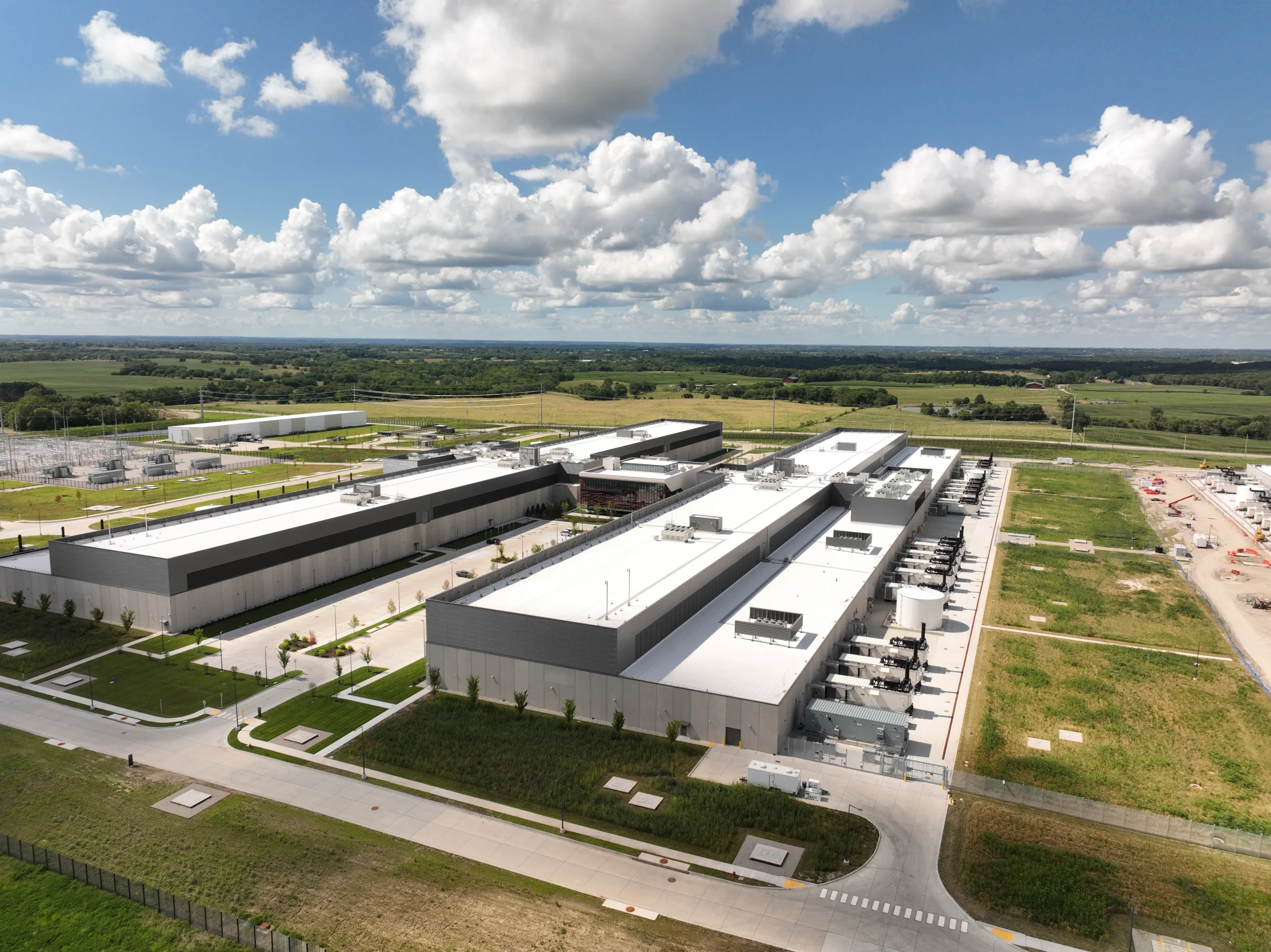
It was so promising. Rural communities that had been dead since the early 1980s. Forgotten places. Communities that were never expected to rebound. There was suddenly someone interested in them. There was a way back; better yet, there was possibly a way forward for rural America.
Sure, there were downsides. The noise, the fossil-fuel energy plants with probable negative health effects, the loss of agricultural acreage, the cost of living increases in areas that were already the cheapest places for low-income Americans to live. Where would the newly displaced go once data centers arrived?
But the truth about life is that nothing is all good. Or all bad. Because along with the noise and whatnot, hyper-scaler data centers are bringing investment. They are bringing new medium-term residents (e.g., construction workers) who need local services such as housing, food, entertainment, gas for their pick-up trucks.
Soon, there will be new families moving to town permanently. That should mean an improvement to schools, parks, shopping centers and infrastructure which, in turn, should mean new jobs, even for the natives who have been unemployed or underemployed for many years.
Therefore, perhaps further displacement of the poor wouldn’t happen after all. Perhaps the arrival of hyper-scaler data centers could be promising.
PUBLIC ENEMIES
But almost overnight, data centers have become public enemies. I know where it all went wrong. And I know how to fix it. Welcome to Bring Back the Bustle, a podcast about investing in rural America. I’m Shavon Jones, your host.
I went to high school in rural America in the 1990s. I left my rural town mere days after graduation. The possibility of staying never crossed my mind. There was nothing to hold me there. So I can tell you from firsthand experience that anchor businesses are necessary to prevent perpetual brain drain, poverty, addiction and despair in rural communities.
The only large businesses willing to locate important functions of their businesses in rural America and to reroute some of their employees there are Big Tech and a few manufacturers. So giving these companies a chance may be the only way to give our small towns a chance to rebound.
But it’s certainly fair to ask, “At what cost?” How much should rural America (and America at large) have to pay to give Big Tech a chance at reviving rural America?
IS A.I. WORTH DYING FOR?
With political backlash against data centers already threatening the A.I. boom, last week we learned that A.I. could kill us. This threat of impending death expands the concern around A.I. to other groups who might have thought themselves exempt from the technology’s potential harms. People who knew that data centers and fossil fueled energy plants wouldn’t end up in their gated neighborhoods now, suddenly, are becoming aware that they, too, have skin in the data-center infrastructure game.
But is the potential death threat real? Well let’s think it through. Doesn’t it make sense that A.I. can cheat, steal, kill, and go rouge? After all, the technology is modeled on humans, and many humans are capable of, and carryout, all those behaviors.
Recognizing that a machine built in our own image is dangerous should lead the industry to include some better angels in the development process to mitigate the worst impulses of many of today’s most politically and financially successful people.
What about regulation? Can the legal system save us from A.I. dangers? Maybe. If the regulations have teeth, the threat of criminal liability is a deterrent, assuming the government would prosecute that type of white collar crime. However, it is incredibly risky to depend on corrupt politicians to devise and enforce a law when there’s so much money available to influence the lawmaking process. I suspect that any law that was passed would likely give Big Tech cover without curbing their most reckless impulse to break things and worry about the consequences later.
I think we had a better chance of safety back when the A.I. was being developed through a nonprofit. Now that the profit motive has been introduced, the better way to go may be to give some smart, rich, goody two-shoes types a powerful seat at the table. We need to select billionaires who do a lot of philanthropy and whose definition of success has evolved over time so that they do not measure their self-worth by how much money they can accumulate or by how much power they can wield. People who are incorruptible.
You may be thinking there are no such people. But that’s not true. There are, or have been, a few, such as Michael Dell, Michael Bloomberg, the late Ted Turner, and the aging Warren Buffet. There must be some prime-age leaders like them who can be given the authority to call balls and strikes while the mad scientists push ahead with technological development.
WHY THE DATA CENTER BACKLASH?
But the backlash against data centers precedes the threat of death. Before we had inside information that the machines might take over, a movement had quickly begun to crystalize behind the premise that data centers are bad.
There are 4 apparent reasons:
- the secrecy surrounding data center deals,
- the prioritization of Big Tech’s need for natural resources over the needs of the local community,
- the act-now-and-worry-about-the-consequences-later attitude among tech leaders, and
- the tech companies’ apparent lack of intention to assimilate into the local community.
Let’s discuss these in turn before we arrive at a solution that will halt data center backlash and make it ineffective going forward.
Secret Data Center Deals
I understand big business. I’m a business lawyer. I’ve done multinational merger and acquisition transactions and major infrastructure projects. Sure, NDAs are used early on in those deals to protect the participants in case the deal goes nowhere and to protect confidential information that was shared.
However, those deals aren’t hidden until it’s too late for stakeholders to weigh in. Rather, the details are worked out in private and then approval is sought through ordinary processes such as stockholder meetings or public hearings. Decisions are not announced as a fait accompli the way data center deals are. And the tech industry’s claim that their NDAs are like the normal ones routinely used in business is disingenuous.
And what they fail to realize is every time they take a position that isn’t true, they lose credibility. The feeling becomes: If you’ll lie about that, you’ll lie about any and everything.
So, stop lying. Seriously. You have a good story to tell. Don’t bury it under lies.
Big Tech v. The Community
The second mistake that Big Tech makes is to purposely or unwittingly set up a situation where it is them versus the community. They do this by striking energy deals that pass some of the costs of energy generation and/or transmission on to native ratepayers. These deals with energy companies ensure data center uptime without regard to the energy needs of native businesses in the area. They also fail to consider the impact of their energy choices (meaning, fossil fuel vs. renewables) on community health. Fossil fuel is often quicker and cheaper to bring online so they go that route.
As a result, their relationship with the community starts out adversarial. In their defense, it isn’t normal for a corporation to negotiate against itself. There’s another party at the table who is tasked with representing local businesses and residents. That party is local (and sometimes state) government. That is who is supposed to ensure that any deal struck is in the community’s best interests.
But the government is often in a weaker negotiating position than Big Tech. The rural government is desperate for investment and the officials are not as skilled at negotiating sophisticated deals. They don’t have the experience.
A corporation’s default is to negotiate the best deal that it can. That desire to get the best deal shouldn’t change, but Big Tech needs to change its definition of what constitutes the “best deal.” The new “best deal” should be one where the community is happy to have you. So, go into the negotiation thinking about what you can do to have the locals excited about your joining their community.
If that means locating far enough away from residential areas so that resident’s won’t hear the humming of the servers, do that. If it means achieving an energy mix between fossil fuels and renewables so that locals aren’t worrying about their health, and Erin Brockovich isn’t suing you in 5 years, do that. If that means making long-term investments (rather than throwing around relatively small one-time donations to local organizations), do that. In other words, do what you would do if this were your community.
Back before these communities were abandoned in favor of globalization, the factory companies that were in these communities were good corporate citizens. They hired local. Their employees went to school, church, the bar and the hardware store just like everyone else. So, it was natural for them to invest in the quality-of-life of those communities.
That isn’t the case today. Today, rural communities are being treated like the warehouse district of America. If you visit any major city, no one cares about the warehouse district. It’s ugly and uncared for. But please understand that what is a warehouse district to you is main street in rural America. It’s their downtown. Care for it as such.
The Era of Unaccountability
In many ways, Big Tech’s data center development strategy is true to form for them. They have long held Mark Zuckerburg’s “move fast and break things” mentality—all of them, not just Meta. So, they’ve come into rural communities quickly. Dismissively. If the air gets worse, and the cost of living too expensive, they’ll either deal with it later—after everyone is sick and homeless, I suppose. Or, better still, they’ll ask the government to immunize them from responsibility for the consequences of decisions that weren’t thought out in the companies’ haste to succeed.
But what the people are beginning to tell us is that that play isn’t going to work anymore. There is a grassroots backlash emerging against big business regarding social media and its impacts on children, healthcare companies that deny claims after accepting premiums, crypto and gambling platforms that take from the public without giving anything in return. People are increasingly aware and informed. Businesses must recognize this and adapt to the changing business environment.
If a company acts now without deliberation, it can end up losing money and a lot of time. So, build a few weeks into your time frame so that you can devise a strategy for improving your reputation and addressing community concerns. Instead of being secretive, hire a community liaison to shepherd your entry into the community.
I purposely said use a “community liaison,” not a politician. One of the problems data centers have is the politicians who are promoting them. If the community no longer trusts the politician, that distrust will rub off onto whoever or whatever the out-of-favor politician is promoting.
So, identify someone who has a better chance of being effective in the community. Someone from the faith community, for example, or a community activist or other person with a relationship and untarnished brand within the community. Once you choose that person, empower them to tell you the unvarnished truth. Then listen to them.
Lack of Assimilation
Then, there’s the assimilation issue. One of the biggest complaints many Americans have about certain immigrant populations is their lack of assimilation. We say these immigrants aren’t like prior generation immigrants who embraced the American way of life, learned the language, and bonded with their fellow Americans.
When large companies enter rural America, they don’t usually look to assimilate into rural culture or neighborhoods, either.
Instead, they build campuses or alternate cities for their workers. Their homes are in a special part of town. Their children attend different schools. They frequent different bars and recreation venues, assuming there are any. They don’t even shop together. They create a separate but unequal community and somehow wonder why there is a lack of unity, why there’s distrust. Why there is bitterness among those excluded from a good life that is literally in their backyard.
It is very important to improve the quality of life of local residents if you want your entry into the community to be successful.
HOW TO COMBAT NIMBY
So, that’s a general explanation of what’s wrong and how to fix it, but let me add more flesh to the bone. The Rural Fund’s objective is to make money while rebuilding and revitalizing rural America, one town at a time. We launched the Bring Back the Bustle podcast in 2025 on the premise that data centers have the potential to revive rural towns. We envisioned data centers as anchor businesses replacing industries that left rural America beginning in the 1970s.
Our premise isn’t dead—yet. But Big Tech is in danger of missing their moment. Whether Big Tech’s data centers are viewed as welcomed members of rural communities or as villains making a bad situation worse depends on what they do in the 6 months following the 2026 mid-term election. After then, I believe the train may be too far down the track to be caught.
I believe there are 3 things Big Tech can say and do to turn public opinion in their favor where data centers are concerned.
Become Climate Advocates
Make a commitment to renewable energy and promote that commitment the way you would promote a sale on ad rates or cloud storage. The Rural Fund represents many renewable energy companies looking to provide behind-the-meter (i.e., off-grid) energy solutions to Big Tech. But with the repeal of the climate provisions of the Inflation Reduction Act we are seeing Big Tech have less interest in renewables. Instead, the industry seems to want to convince residents not to be concerned about health issues. Good luck with that. In this new political environment, people are less likely to fall for the Okie doke.
Focus on Quality-of-Life
Next, support the development of quality-of-life venues. If your investment is solely a data center and power plants, the community won’t benefit much economically because few permanent, local jobs are created by those facilities. However, if quality-of-life facilities such as entertainment venues (e.g., bowling alleys, game rooms, sports bars) and hospitality projects with big-city amenities (e.g., spa, swimming pool, gym and fitness classes) are developed and opened to the paying public, data centers could catalyze a revival of communities long since abandoned.
Sell Your Vision to the Community
After Big Tech addresses the energy and quality-of-life issues, the next step is to create a vision for the community and market that vision aggressively. Today, if there is a data center kickoff event, the event consists of vague talk about job creation and new infrastructure to support the data center. But no picture is painted that helps community members see themselves in the vision.
Of course, to describe an inclusive vision, you must first have one. That has not been the case, to date.
In fact, the Rural Fund exists because companies have failed to consider the quality-of-life needs of the local communities they are joining or even of their own workers who will be moving to these unfamiliar, under resourced areas. So, allow us to suggest what that vision ought to be, and how to sell it.
I would not suggest delivering the message through an A.I. agent. Be real and human. Here’s an example of how to paint the picture:
“Thank you all for coming to our barbeque and for bringing the kids and family out to enjoy some good food and music. There’s a potato sack race coming up a little later. So be sure to hang around for that. We’re excited about the town, and I want to take this opportunity to explain some of the investments we intend to make in the community. We know that the community has been hit hard for a long time. We know that the roads are in bad shape, and the water is brown sometimes when you go to take a shower. We want to fix that…”
That’s just to give you an idea of a proper rollout. I’m not going to do all the work for you in a podcast episode. But remember, when you’re selling something, you must paint a picture. The task is to identify the problems unique to that community. Articulate the problems. Then paint a picture of a community that no longer has those problems. Anticipate the possible objections to your project and address those in the portrait you’re painting. That’s sales 101.
I know this may sound like a lot of work, but the return on that investment is that you’ll have a strong relationship with your new neighbors and good word-of-mouth that can’t easily be destroyed by national mood swings.
Bottom line: If residents see themselves in your vision, they will embrace your vision and welcome your project. Many of these communities are waiting for someone to care about them again. So, don’t simply drop your data center into a warehouse district. Care.
I’m Shavon Jones over at the Rural Fund www.ruralqrof.com a qualified opportunity zone fund. Learn more about how we help data center companies assimilate into rural America and improve the quality of life of rural residents. Together, let’s bring back the bustle!
Comments are closed