
Ways to Combat Rural Blight
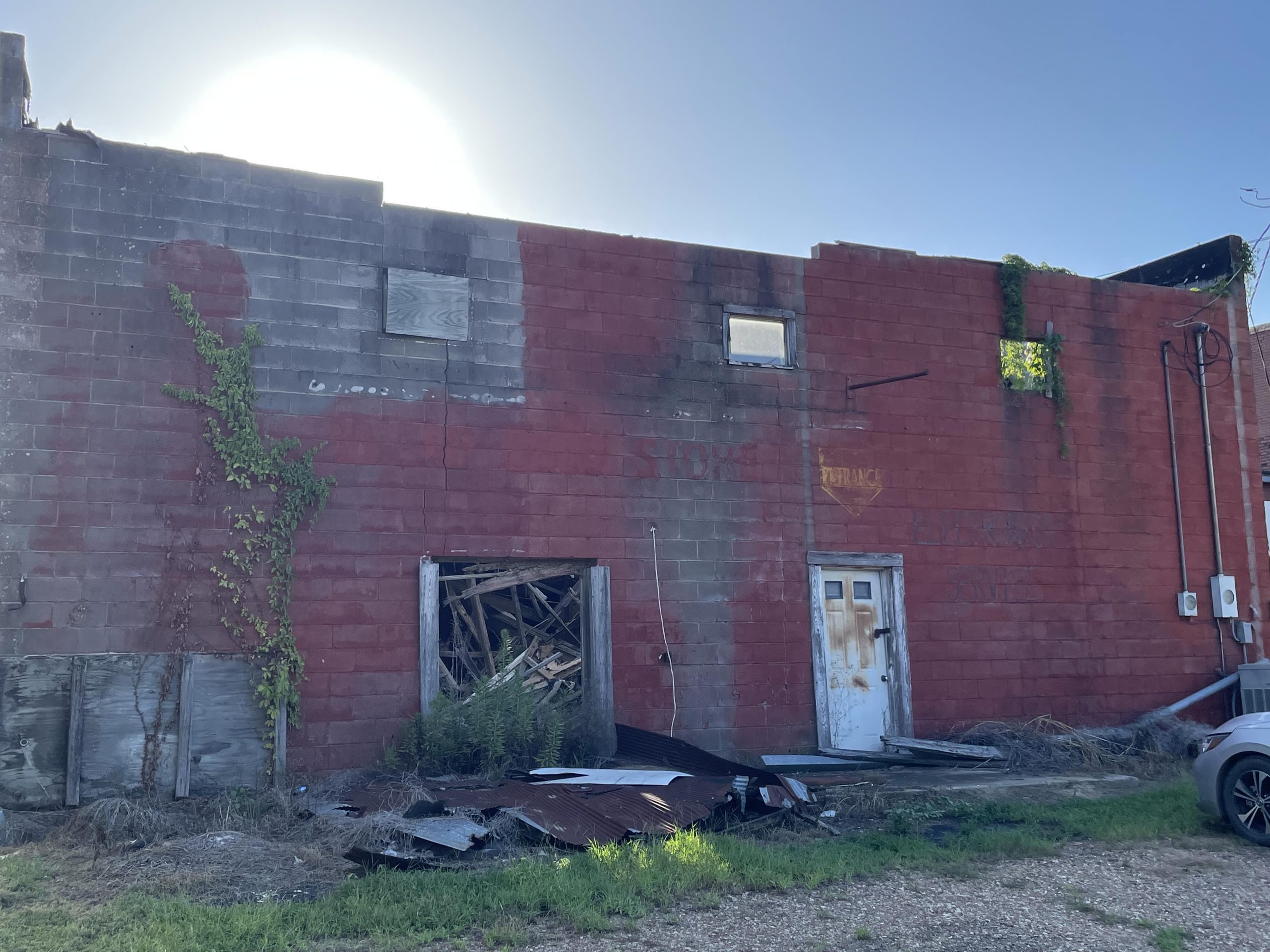
In rural America, one of the consequences of globalization is blight. Many buildings sit idle or in disrepair. There is no code enforcement to speak of. As long as the property owners pay taxes, sometimes as little as a couple hundred dollars per year, they are permitted to hold their property. And to, unfortunately, bring down the value of everyone else’s.
Welcome to Bring Back the Bustle, a podcast about revitalizing rural America. I’m Shavon Jones, your host.
Today’s episode is about combatting rural blight to attract investment in rural America. If you reside in a major city, you understand that a function of local government is to ensure the safety and fitness for occupancy of real property. Municipalities are supposed to have a building code and enforce it. However, rural communities don’t always have adequate standards or enforce the ones they have.
The Costs of Rural Blight
They allow attractive nuisances to exist on Main Street. A particularly egregious example, and this is a true story, is an historic mid-century movie theater in a rural town in Louisiana. The bones of the building are beautiful, a possible candidate for inclusion in the National Register of Historic Places. However, it has sat empty for 40 years. The roof and foundation are missing. Dozens of decades-old trees grow where rows of theater seats once were. The theater lights and wires dangle from the marquee whose wood has dry rotted. This is an extreme case. No one has entered the doors for at least 15 years. They worry that snakes have made the forrest inside their home.
But other abandoned structures endanger not only the unhoused and drug addicted who may squat therein but also
- children who are too young to recognize the dangers that may lurk inside,
- owners of nearby properties whose property values and revenues are depressed, and
- the town itself which loses out on tax revenues and population growth.
Desperate adults. The unhoused and drug addicted often live in and/or use drugs in abandoned buildings. Some have inadvertently burned down buildings while using fire to keep warm or to light their drugs.
Unsuspecting children. Children sometimes like to hang out in vacant buildings. These buildings may be invested with mold, asbestos, rats, snakes and other dangerous animals or organisms. Older children may use these spaces to engage in truancy or in consensual or even nonconsensual sex with other children.
Neighboring Property Owners. A potential tenant or buyer may shy away from a building surrounded by blight. They know the presence of vagrants will cause customers to second guess doing business with them. They’ll have to work harder to attract customers. They’ll need to spend money on security. They will discount their offers accordingly.
Communities. Blight is incredibly expensive to a town. If the town looks run down, it’s hard to attract investment. An empty building is not only loss tax revenues, but also one less space for local residents to make productive use of. It’s a visible symbol of decline. Residents starring in the face of multiple barren buildings lose hope. Both the town and the people become stuck in a rut.
Cracking down on rural blight can prevent these harms and allow rural towns to bounce back.
Why Owners Let Their Properties Go
Understanding the causes and reasons for blight can help in establishing fair blight policies.
The root cause of blight is usually changes in the economy. Economic shifts lead to industry loss, job loss, population loss, and the exodus of small business tenants from the town.
But the reason the blight becomes insidious is usually the owner’s lack of resources to maintain the property. No owner wants their property to sit empty or to fall into disrepair. The owner understands that one problem leads to another. A leaky roof leads to mold and dry rot and crumbling infrastructure. Eventually, the property value is only a fraction of what it once was. It is reasonable to assume that a property owner wouldn’t allow such a situation to take hold if the resources were available to prevent it.
Some Approaches Go Too Far
While some towns have no process in place to address blight, others have policies that go too far. The Pennsylvania’s 2008 so-called “Abandoned and Blighted Property Conservatorship Act” is a law that goes too far. It turns everyday citizens into bounty hunters. When they identify a blighted property, they have standing to go to court. They get appointed the conservator of the property, purportedly to make repairs.
The repairs and legal fees are then charged back against the property. When the owner cannot pay the fees and repair costs, the property is sold. The buyer is often to an investor who backed the conservator’s legal action from the get-go. The now-former owner’s equity in the property is then turned over to the conservator as a reimbursement for the repairs and legal fees.
Let’s pause for a second and take that in. A property owner has to pay the legal fees to take his own property. If the owner opts to fight the conservatorship in court, they also have to pay their own lawyer. Therefore, someone who didn’t have enough money for repairs now has two sets of attorney’s fees tacked on to those repair costs.
The conservator is ia third party making repairs that they ultimately are not financially responsible for. Do you think they look for the best price? Pennsylvania law ensures that the conservator does just the opposite. The law marks up the cost of the repairs by 20% and awards that money to the conservator when the property is sold.
This system is ripe for these and other abuses. University of Pennsylvania Professor, Cara McClellan, says the law is robbing low-income people of color of homes and any wealth in them that they may have accumulated. The data McClellan points to suggests that developers are using the law to further gentrification.
Gentrification isn’t limited to large cities like Philadelphia. It is possible in small towns, too. And the effects of gentrification in a small town are even more damaging to residents. While a Philadelphia resident can move to a rural town, there’s no place else for rural residents to go. They are already in the lowest cost area.
A Healthy Balance among the Owner, the Town and the Investor
Towns need reasonable building codes. The codes should protect the owner of the blighted property and the property values of nearby parcels as well as to encourage development and economic growth.
There are Main Street community development guidelines that a town can use as a baseline for establishing standards. These guidelines are useful whether or not the town is a participant in the nationwide Main Street program.
Carrot and stick programs tend to be the most favorable to local owners to help them stay in deals when outside investors come in. From a carrot standpoint, if the town has local, state or federal resources, the town can consider providing grants or other incentives to property owners to use to the repair of their property.
Of course, the carrot approach may not work if the property is too far gone. Plus, residents who used their own money to maintain their properties may resent that others are being given money for such upkeep. So you have to convince those who do not get an incentive that the increase in their property value is an indirect subsidy.
If, despite the availability of a carrot, a property owner is unable or unwilling to bring their property up to code and won’t sell it at a reasonable price, the town should apply the stick. Impose code enforcement liens. If the property owner fails to clear the code enforcement liens, the town should sell the property to the highest bidder and give any equity to the pre-sale owner.
That is a much fairer system than deputizing neighbors against neighbors in search of a quick buck. Back in Philadelphia, which has the highest incidence of enforcement of Pennsylvania’s takings law, a couple of citizens have turned conservatorships into businesses. In theory, they earn the highest of (i) $2,500, (ii) a 20% markup on repair costs, or (iii) 20% of the sale proceeds on each property.
However, in practice, the repair costs were incurred by the investor who funded the lawsuit. So, the investor gets the markup. The sale proceeds also do not amount to much since the property is bought by the investor for pennies on the dollars. Therefore, the conservator plaintiff ends up with $2,500.
These conservators bring about 60 cases each year, on average. These conservator plaintiffs often are themselves people of color robbing fellow minorities of their wealth. But since the conservator plaintiffs are not the bidders at the sheriff sale, they don’t become property owners themselves. Instead, they seem to function as proxies for the buyer, sort of like foremen disciplining field hands on a plantation.
Bottom Line
Bottom line, If the town looks run down, it’s hard to attract investment. Investors will be more likely to invest in rural towns if the towns have building ordinances and enforce them. An enforcement system doesn’t necessarily have to harm local property owners. As we discussed in our episode entitled “How to Rehab Rural Downtown Communities,” long-term property owners can benefit from historic buildings. They can share in the economic growth spurred by new investment. Instead of getting pushed out, historic buildings can help them monetize long nonperforming assets.
However, if a particular owner doesn’t want to be a good neighbor, the town should stand ready to support the other property owners who are maintaining their properties and contributing jobs and good energy to the community. The town needs a process for combatting rural blight that is fair to all stakeholders. Local politicians should balance incentives with an enforcement mechanism. Pass an ordinance and enforce it.
As usual, there are several links in the transcript to this podcast. If you want to listen to that prior episode I mentioned (which is no longer part of our 10-episode feed) or if you want to know more about Prof. McClellan’s research findings and analysis, visit our site and click the links. The site is ruralqrof.com. QROF means qualified rural opportunity fund. I’m Shavon Jones. I’m looking forward to another episode next week, and I hope you are as well.
No responses yet